Colombian fajas: which one to buy and how to choose your size
A Colombian faja is a firm compression garment that shapes your waist, belly and butt while you wear it. Types, how to measure your size, how to spot an authentic one and how long to wear it safely.
What a Colombian faja is
A Colombian faja is a firm compression shaping garment, almost always made of powernet (a stretch fabric of polyamide and spandex) and sometimes with a latex panel over the belly, that slims the waist, flattens the stomach and lifts the butt while you wear it. It takes its name from the industry behind it: Leonisa, for example, was founded in Medellín, Colombia, in 1956.
Compared with the light shapewear that sells most in the US, a Colombian faja tends to be firmer, rises higher up the back, adjusts with several rows of hooks and often leaves the buttocks free to lift them.
Our pick
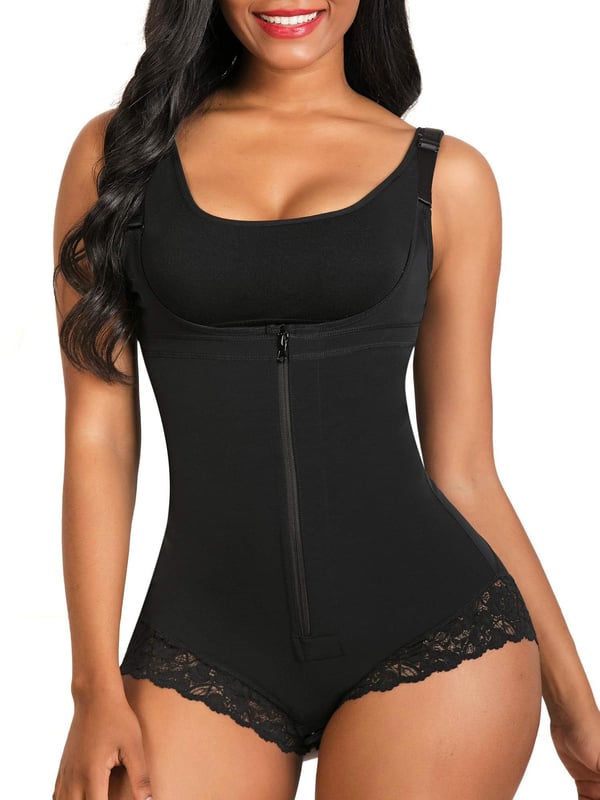
SHAPERX open-bust faja bodysuit with zipper and hooks
According to the listing, a firm-control, high-waisted faja bodysuit, open-bust so you wear your own bra, closing with hooks inside and a zipper outside, with adjustable non-slip straps, brief-style legs with lace and a bathroom opening. It's the firm option in this guide, in the style of a Colombian faja.
Check before you buy
- The listing's size chart goes by waist and hips in inches: measure both and, if you fall between sizes, read reviews that say whether it runs large or small.
- That the listing calls it a «Colombian faja» but doesn't state the country of origin: it's the style, not where it's from.
- That the listing also pitches it as a postpartum faja: after childbirth or a C-section, ask your obstetrician before wearing a firm-control faja.
- That it's firm control: start with a few hours and take it off if breathing gets hard or you notice reflux or tingling in your thigh. The listing suggests fastening the inner hooks only halfway if it's tight around the chest.
- Who sells it and THIS item's return policy before you pay (when we checked, it was sold by SHAPERX and shipped by Amazon).
Prices and availability change: always check the current price on Amazon.
Our pick
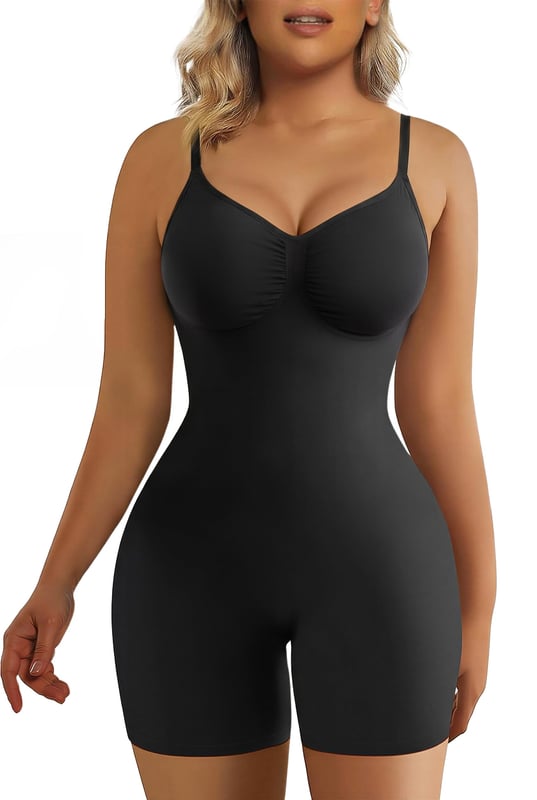
SHAPERX seamless shaping bodysuit with mid-thigh shorts
According to the listing, a seamless shaping bodysuit in 78% nylon and 22% spandex, with a soft unpadded bra and adjustable straps, tummy control, mid-thigh legs and an open gusset for bathroom trips. It isn't a powernet Colombian faja: it's light everyday shapewear to wear under clothes, the simplest way into this guide.
Check before you buy
- The listing's size chart: it asks for bust, waist and hip measurements, and warns that the bodysuit looks «small» the first time because the fabric stretches a lot. Find your three measurements before choosing.
- That it's seamless shapewear with no hooks: it smooths and shapes, but doesn't give the firmness of a Colombian faja.
- That the bra is soft and unpadded: if you need a lot of bust support, read reviews from buyers with your cup size.
- The color and size the link opens: the listing has several options.
- Who sells it and THIS item's return policy before you pay (when we checked, it was sold by SHAPERX and shipped by Amazon).
Prices and availability change: always check the current price on Amazon.
What a faja does and what it doesn't
A faja changes your silhouette while you wear it. It doesn't burn fat or make you lose weight: Cleveland Clinic explains that a waist trainer can't slim your waist permanently and that any effect is temporary. «Slimming» is a sales word: it reduces measurements while it's on, not afterwards.
It doesn't replace exercise either. Physiatrist Dena Barsoum, of the Hospital for Special Surgery, warns that muscles can get weaker «because they're not having to do any work» and that organs need room, which a waist trainer takes away.
Types of faja and what each one is for
Full bodysuit: covers you from bust to thighs. Some come with a bra and others are open-bust, so you wear your own. It's the one that shapes most under a fitted dress.
Waist cincher or vest: waist and belly only, often with latex and hooks. It's the one sold as a «waist trainer», and the one Cleveland Clinic recommends saving for special occasions and a few hours.
Butt-lifting shorts or panty: from belly to thighs, with the buttocks left free or reinforced to lift them. It's the easiest to wear every day under pants.
Postpartum and post-surgical fajas: they are made for recovery, not for shaping. Post-surgical ones are sold in stages (stage 1, stage 2); we explain below what that means.
If it's your first faja, shorts or a medium-compression bodysuit are usually the most sensible way in: they show less, they're easier to put on and they let you find out how much compression you tolerate.
How to choose your faja size
1. Measure your waist at its narrowest point and your hips at their widest, with the tape snug but not tight and, if you can, wearing an unpadded bra, as Leonisa advises. 2. Write the measurements down in inches: almost every chart on Amazon US uses them. 3. Look your measurements up in THAT product's chart: each brand, and even each model, has its own chart, and one brand's M is not another's.
If you fall between two sizes, the waist usually decides in a faja, and many stores recommend the larger size. A faja that's too small doesn't slim you more: it squeezes, rolls, digs in and is the one that causes problems.
Read the reviews that talk about sizing («runs small», «runs large»): they're the most useful clue before you order.
Authentic Colombian fajas: how to spot them on Amazon
Amazon sells many generic fajas with the word «Colombian» in the title. To get closer to an authentic one: 1. Check who sells it: the brand's official store («Visit the … Store») or Amazon rather than an unknown seller. 2. Look in the product details for the country of origin («Made in Colombia»). 3. Check the composition: powernet with its spandex percentage, and whether it has latex. 4. Look at the photos buyers post in the reviews, not only the listing's.
Neither the origin nor the brand guarantees a good fit: the size and the type of faja matter more than the label.
How long to wear it and when it's too tight
Cleveland Clinic recommends not making a waist trainer an everyday thing: wear it for special events and a couple of hours at most, don't sleep in it and don't wear it on consecutive days. The pressure on ribs and belly can make breathing harder, worsen reflux and cause gas and bloating.
Take it off if you can't breathe deeply, if you notice heartburn or reflux, leg swelling, or tingling or numbness on the outer thigh: a very tight garment can compress the nerve that runs just below the hip bone.
If you have a latex allergy or sensitive skin, avoid fajas with latex: they don't breathe, and Cleveland Clinic advises against them in those cases.
For everyday wear, look for a faja with a bathroom opening: it's more comfortable and you won't hold it in because the faja is hard to take off.
Fajas after childbirth or surgery
After a C-section: a 2025 meta-analysis of 13 randomized trials found that abdominal binders reduced pain during the first 48 hours, with no extra complications. Those trials used medical abdominal binders, not shaping fajas: ask your obstetrician which one to use and from when.
After liposuction, a tummy tuck or other surgery: the compression garment is part of recovery and your surgeon prescribes it. That's why stages exist: stage 1 puts ease of getting in and adjusting first (several hook rows, zipper, opening) and leaves room for swelling; stage 2 is firmer and shapes more. The switch usually comes between the second and fourth week, but it depends on how you heal: don't switch stages or buy a firmer one on your own.
Call your medical team if a soft bulge that moves like fluid appears, if pain gets worse instead of easing or if you have a fever of 100.4 °F (38 °C) or higher. Go to the emergency room if you have swelling and pain in one calf, sudden shortness of breath or chest pain.
Before you buy on Amazon
1. THAT model's size chart, in inches. 2. The type: bodysuit, shorts, cincher or post-surgical, depending on what you want it for. 3. Whether it has latex. 4. The closures (hooks, zipper or both) and whether it has a bathroom opening. 5. Who sells it and the country of origin. 6. THAT item's return policy: underwear and shapewear sometimes have special conditions.
Frequently asked questions
What's the best Colombian faja?
There's no single best one: it depends on what you want it for. For everyday wear, shorts or a medium-compression bodysuit; for a fitted dress, a full bodysuit; after surgery, the one your surgeon prescribes. More than the brand, what matters is that the size is yours according to that model's chart.
Do Colombian fajas really slim your waist?
Only while you wear them. According to Cleveland Clinic, a waist trainer doesn't slim the waist permanently or make you lose weight: when you take it off, your body returns to its shape.
How many hours a day can you wear a faja?
For waist trainers, Cleveland Clinic recommends saving them for special events and a couple of hours at most, not on consecutive days. With any faja, take it off if breathing gets hard or you notice reflux, thigh tingling or leg swelling.
Can you sleep in a faja?
Cleveland Clinic advises against sleeping in a waist trainer. The exception is a post-surgical faja, which may be prescribed day and night for the first weeks: in that case your surgeon decides.
What faja size should I order?
Measure your waist at its narrowest and your hips at their widest, in inches, and look them up in THAT model's chart: every brand has its own. If you fall between two sizes, the waist usually decides in a faja, and many stores recommend the larger one.
How can I tell if a Colombian faja is authentic?
On Amazon, check who sells it (the brand's official store or Amazon), look for «Made in Colombia» as the country of origin in the product details and check the composition. Many generic fajas put the word «Colombian» in the title without being from there.
When can I wear a faja after a C-section?
Ask your obstetrician. A 2025 meta-analysis of 13 trials found that medical abdominal binders reduced pain in the first 48 hours after a C-section, with no extra complications, but that doesn't apply to a firm shaping faja.
What's the difference between a faja and a waist trainer?
A waist trainer covers only the waist and belly and usually has latex and hooks. A faja (bodysuit or shorts) covers more: from the bust or waist down to the thighs. The waist trainer squeezes hardest over the smallest area.
Sources
- Cleveland Clinic: ¿funcionan las cinturillas (waist trainers)?
- Hospital for Special Surgery: las cinturillas, dinero perdido y potencialmente dañinas
- NPR: un neurólogo sobre las fajas ajustadas y el nervio del muslo
- Lin y otros, Midwifery (2025): fajas abdominales tras una cesárea, metaanálisis de 13 ensayos aleatorizados
- Leonisa: cómo medir cintura y cadera (datos de la marca)
- Acibadem: las etapas de la faja posquirúrgica y cuándo cambiar