Magnesium glycinate, citrate or oxide: which to choose
For sleep, magnesium glycinate is the most used; citrate and oxide can have a laxative effect. What changes between forms, what we know and don't, and how to choose by looking at elemental magnesium.
In one line
For sleep, the most used form is glycinate (bisglycinate) and it's the only one with a sleep trial; citrate and oxide are rougher on the stomach because they can have a laxative effect. Form isn't the only thing that matters: elemental magnesium per serving counts.
Our pick
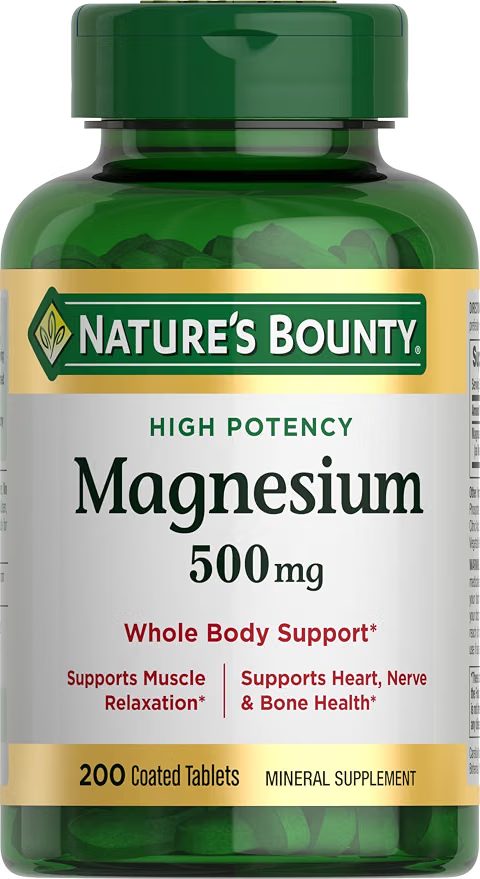
Nature's Bounty: magnesium 500 mg, high potency tablets
According to the listing, coated magnesium tablets with 500 mg each (119% of the daily value), gluten-free and without artificial flavors or sweeteners. The listing pitches it for bones, muscles and energy. It's an example of how to read the label: a single tablet is already over 350 mg.
Check before you buy
- The form of magnesium (oxide, citrate, glycinate…): read it on the label's ingredient list, because the listing's points don't say.
- That one tablet holds 500 mg of magnesium, above the 350 mg a day limit the NIH sets for magnesium from supplements: read the dose the label gives and, if in doubt, ask your doctor.
- That the listing pitches it for bones, muscles and energy, not for sleep: there's no sleep trial on this product.
- The number of tablets in the pack: the link opens one specific version and the image shows a 200-count bottle.
- The return policy for THIS item before you pay.
Prices and availability change: always check the current price on Amazon.
Glycinate or bisglycinate
It's magnesium bound to glycine, an amino acid. It's often recommended for sleep and it's the gentlest on the stomach according to consumer and pharmacy sources. It's also the form used in the 2025 trial of 155 adults who slept badly (250 mg of elemental magnesium a day, small effect). That doesn't prove it's better than the others: no trials compare them head to head.
Citrate
It's magnesium bound to citric acid. It's usually absorbed well, but it draws water into the gut and at high doses can cause diarrhea, gas or cramps, which is why it's also used as a laxative. If your stomach is sensitive, start with a low dose.
Oxide
Oxide is the cheapest form and the one with the most magnesium by weight (about 60%, versus 16% for citrate and 14% for bisglycinate, usual reference figures; the label rules). It's often said to be absorbed worse than citrate or amino-acid forms and to have more laxative effect; we couldn't confirm that in the official source, so take it as a guide. If you buy oxide, what counts is still elemental magnesium per serving.
Threonate, malate, taurate and others
There are many more forms, each advertised for something different: threonate for the brain, malate for energy, taurate for the heart. The evidence we saw for those uses is preliminary or missing, so we can't recommend them for sleep.
How to choose
1. If you want to sleep: glycinate or bisglycinate, the form with a trial behind it. 2. If your stomach is sensitive: avoid citrate and oxide at high doses. 3. Always check mg of elemental magnesium per serving and how many capsules make a serving, and don't go over the 350 mg a day from supplements the NIH sets without talking to your doctor. 4. A «sleep» product with melatonin or ashwagandha added doesn't tell you what's working.