Hydrolyzed collagen: what it does and how to choose one
Hydrolyzed collagen is collagen broken into small peptides and sold as a supplement. What the evidence says about skin, joints, hair and nails, and how to choose one without falling for the marketing.
What hydrolyzed collagen is
Hydrolyzed collagen, also called collagen peptides, is collagen broken into smaller fragments so it dissolves easily. It is sold as a supplement in powder, capsules or tablets and liquid, and usually comes from cow skin or bones, fish or other animals.
Your body already makes collagen, a protein found in skin, tendons and bones. The supplement doesn't «place collagen» where you need it: it is digested like any other protein. That's why what matters is what the studies show, not what the label promises.
Our pick
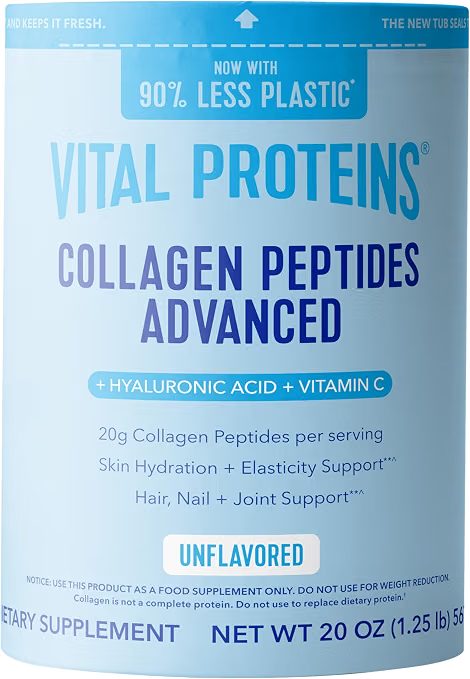
Vital Proteins: collagen peptides with hyaluronic acid and vitamin C
According to the listing, bovine collagen powder (from grass-fed cattle) with 120 mg of hyaluronic acid and 100% of the daily value of vitamin C, dairy- and gluten-free.
Check before you buy
- The label on the pictured tub says 20 g of collagen peptides per serving: check the figure on the version you choose, which is what counts, not the extras.
- That the hyaluronic acid and vitamin C are add-ons: we don't know they improve what collagen does, and they raise the price.
- The tub size and number of servings: the link opens one specific version.
- The one- and two-star reviews, especially those about taste, texture and digestion.
- The return policy for THIS item before you pay.
Prices and availability change: always check the current price on Amazon.
Our pick
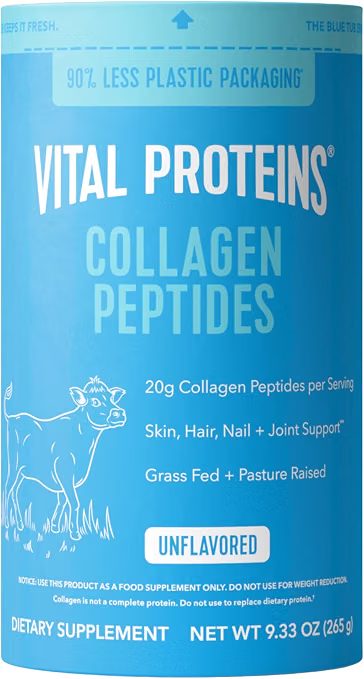
Vital Proteins: unflavored collagen peptides, sugar-free
According to the listing, unflavored bovine collagen powder (from grass-fed cattle hides), dairy- and gluten-free with 0 g of sugar per serving. The listing pitches it for hair, skin, nails, joints and bones; as we saw, the evidence is stronger for skin than for the rest.
Check before you buy
- The label on the pictured tub says 20 g of peptides per serving: check the figure and servings on the version you choose.
- That the claims about hair, nails, joints and bones come from the listing, not from solid studies.
- That it is bovine: not suitable if you avoid beef.
- The one- and two-star reviews, especially those about how it mixes.
- The return policy for THIS item before you pay.
Prices and availability change: always check the current price on Amazon.
Our pick
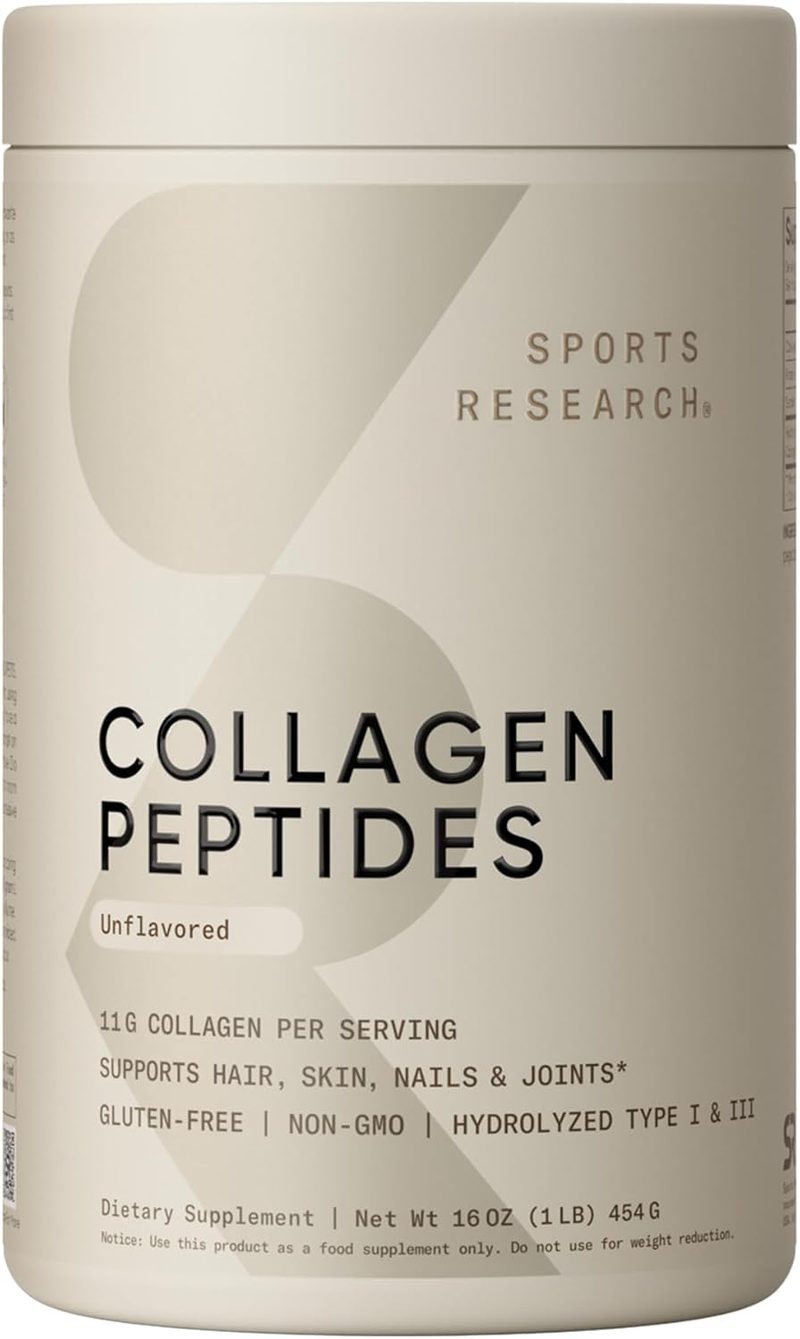
Sports Research: type I and III collagen peptides
According to the listing, unflavored powder with about 11 g (0.39 oz) of type I and III collagen peptides per scoop, 40 calories, no added sugars, dairy, soy or gluten, and «third-party tested» for quality and potency.
Check before you buy
- That «third-party tested» is a brand claim: look for the lab's name or the seal on the listing.
- That the link opens one specific version: check the size and scoops per tub.
- The source of the collagen (the listing says type I and III): confirm whether it's bovine or marine.
- The one- and two-star reviews, especially those about clumping and taste.
- The return policy for THIS item before you pay.
Prices and availability change: always check the current price on Amazon.
Our pick

Vital Vitamins: multi collagen complex capsules
According to the listing, capsules mixing bovine, marine, chicken bone broth and eggshell membrane collagen (types I, II, III, V and X), in a 150-count pack. It's the capsule option, more convenient than powder.
Check before you buy
- How many grams of collagen the daily dose gives and how many capsules that is: one capsule holds little, and studies used grams, not milligrams.
- The allergens: the listing says it contains marine collagen (fish), chicken bone broth and eggshell membrane collagen; if you are allergic to any, it isn't for you.
- That «five types of collagen» is a sales pitch: we don't know that mixing types improves the result.
- The number of capsules in the pack and how long it lasts at the dose: the link opens one specific version.
- The return policy for THIS item before you pay.
Prices and availability change: always check the current price on Amazon.
Our pick
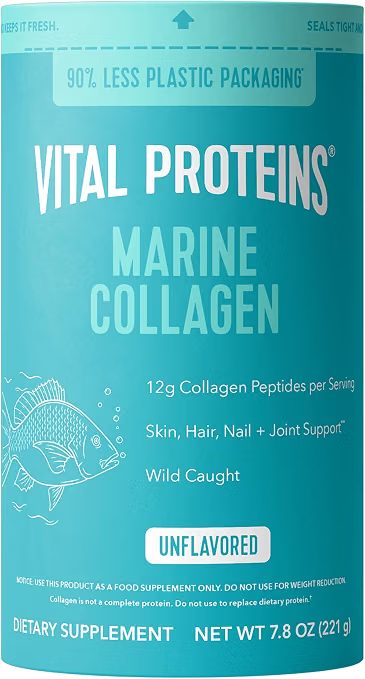
Vital Proteins: unflavored marine collagen powder
According to the listing and the 7.8 oz tub's label, unflavored hydrolyzed marine collagen powder, wild caught, with 12 g of peptides per serving. It's the marine option with the most grams per serving of those we compare.
Check before you buy
- The label on the pictured tub says 12 g of peptides per serving: check the figure and servings on the version you choose.
- That it is marine (fish): not suitable if you are allergic to fish or shellfish.
- That the tub mentions wild caught and skin, hair, nails and joints: those are brand claims, not solid studies.
- The one- and two-star reviews, especially those about smell, taste and how it mixes.
- The return policy for THIS item before you pay.
Prices and availability change: always check the current price on Amazon.
What hydrolyzed collagen is for: what the evidence says
Skin: this is where most studies are. Several meta-analyses of clinical trials find small to moderate improvements in skin hydration and elasticity compared with placebo. One pooled 26 trials with 1,721 participants and another, from 2021, 19 studies with 1,125 participants, almost all women. In the trials, doses ran roughly from 2.5 to 10 grams a day for about 8 to 12 weeks.
But the evidence has limits. Many trials are small, several were funded by a manufacturer, some tested collagen mixed with other ingredients, and a letter published in 2026 in a dermatology journal questions how reliable those meta-analyses are. The sensible expectation is a modest effect, not a transformation.
Joints, bones, hair and nails: they are mentioned a lot, but the evidence is more limited and less consistent than for skin, and there is no solid data to promise it strengthens bones or prevents fractures. Be wary of brands that state it as fact.
Which collagen is best: how to choose without falling for the marketing
No «best» has been shown among brands: the studies don't compare them. What you can check on the label:
1. Grams of collagen per serving. Check the figure is collagen and not a «blend» that includes it. Compare cost per gram of collagen, not the price of the tub.
2. Type and source. It says whether it's bovine, marine or other. This decides whether it works for you (for example if you avoid beef or are allergic to fish).
3. Added ingredients. Vitamin C, hyaluronic acid and other extras sell well, but we don't know that they improve what collagen does; they only raise the price.
4. Third-party testing. A seal from an independent body (for example USP, NSF or Informed Choice) shows the contents were analyzed. Supplements don't go through the pre-approval that medicines do.
5. Sugar, flavor and allergens. Some powders include sweeteners or flavors you don't need.
Marine or bovine collagen
«Marine» describes the source (fish) and «hydrolyzed» describes the processing: a collagen can be both. Marine collagen is mainly type I and is the option if you avoid beef; if you are allergic to fish, don't use it. Claims that marine collagen is «absorbed better» usually come from the manufacturer and aren't confirmed.
Powder, capsules or liquid
Powder lets you adjust the dose and mixes into coffee, smoothies or water. Capsules are more convenient but you need several to reach the grams used in studies, so check how many that takes. Liquids tend to give less collagen per serving and more sugar or additives. In all three, what counts is collagen per serving.
How to take it and for how long
Follow the label dose. In studies it was taken daily for weeks, so consistency matters, not a specific time of day. If after a few months you notice nothing, it's reasonable to stop: the effect, when there is one, is modest.
Who should check first
If you are pregnant or breastfeeding, take medication, have an existing condition or are allergic to fish, eggs or shellfish (depending on the collagen's source), talk to a doctor or dietitian first. A supplement is no substitute for a varied diet or a diagnosis.
Sources
- Efectos del colágeno oral en el envejecimiento de la piel: revisión sistemática y metaanálisis (26 ensayos, 1.721 participantes)
- Efectos de la suplementación con colágeno hidrolizado en el envejecimiento de la piel: revisión sistemática y metaanálisis (2021, 19 estudios)
- Hydrolyzed Collagen for Skin Aging Meta-Analyses Are Unreliable, Journal of Cosmetic Dermatology (2026)
Compare the five collagens side by side